Absolute Cnc Machine Co., Ltd. Mobile/WhatsApp:+86 13115000086 E-mail:info@cnabsolute.com


Absolute Cnc Machine Co., Ltd. Mobile/WhatsApp:+86 13115000086 E-mail:info@cnabsolute.com

Choosing between a three-roll and a four-roll plate rolling machine starts with a part drawing, not the number of rolls. Buyers need to understand how the proposed machine will load, align, pre-bend, form and release the workpiece. The best configuration for one production mix may not be the best for another. A useful comparison therefore follows the complete forming cycle and checks the machine against the material and geometry involved.
Provide the material grade, strength information when available, thickness range and plate width. State the finished inside diameter and the relevant dimensional requirements. If the workpiece is a cone, include its small and large diameters, height or angle and a complete drawing. Tell the supplier whether the material arrives as a rectangular blank, a prepared cone blank or another shape.
Identify the seam allowance and how the part will be fitted or welded after rolling. Explain the edge condition expected before joining. These details influence the pre-bending requirement and how the forming sequence will be assessed. A nominal plate thickness capacity alone does not describe the smallest diameter, usable width or edge result for your particular material.
Rolling the main body of a plate and pre-bending its ends are related but different tasks. Ask for the proposed pre-bending capacity and the conditions under which it applies. Make sure that material strength, plate width and target diameter are stated alongside the thickness. Do not assume that a single rolling capacity number answers both questions.
Ask the supplier to show how each plate end will be formed and how the workpiece is repositioned. The remaining flat length matters if the completed cylinder must fit a specific assembly or welding procedure. Discuss any additional operation that may be needed before or after rolling, so it is included in the production plan rather than discovered during commissioning.
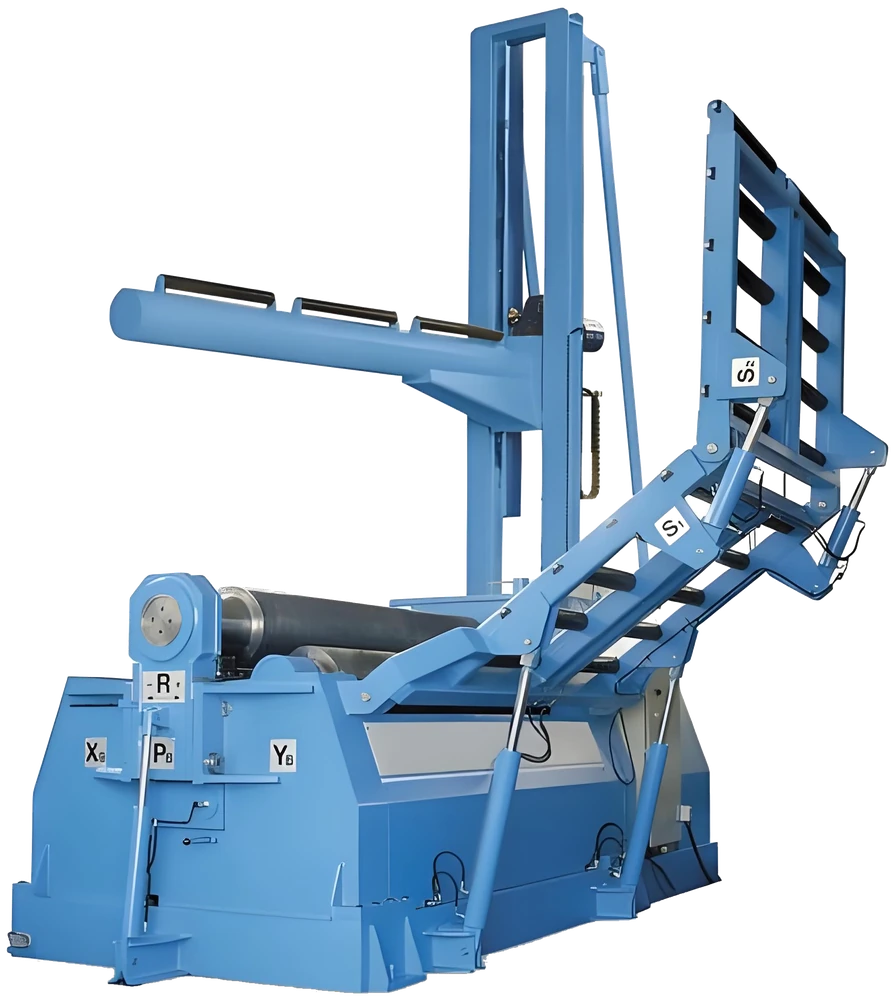
Three-roll machines are available in different arrangements, so the exact design should be identified before discussing its handling sequence. Review how the plate enters, how alignment is established and how the ends are pre-bent. Ask which steps require repositioning, and whether the proposed arrangement suits the range of diameters and batch sizes you expect to produce.
The additional roll in a four-roll arrangement can support controlled clamping and alignment in some workflows. That does not establish a universal cycle time advantage. Controls, roll movement, operator method and handling equipment all affect the result. Compare a full cycle on the same drawing, including loading and release, rather than accepting a general statement that four rolls always mean faster production.
Minimum rolling diameter depends on roll diameters, machine geometry, material properties, thickness and the required pre-bend. Ask for a confirmed working range for your stated material. If several diameters are needed, identify the smallest one and the most common one. A machine suitable for a large cylinder may require a separate review for a much smaller workpiece.
For cones, ask what provisions the quoted configuration includes and what limitations apply. Cone forming capability depends on the arrangement, controls, support and part dimensions. A photograph of a cone does not establish the full usable range. Share the complete drawing and confirm how the workpiece will be guided, handled and removed through the proposed sequence.
Large or flexible workpieces may need support while forming. Ask whether the application calls for overhead or side support, lifting equipment or another handling arrangement. Review how the plate is moved into position and how the finished part is released. Clarify which support equipment is supplied with the machine and which items the buyer must provide.
The workshop layout should allow the intended handling process, with access for operators and maintenance. Discuss electrical supply, available space, installation responsibilities and the destination requirements for documentation and safeguarding. These details are part of a usable machine configuration. They should not be left outside the quotation simply because the machine's basic capacity appears suitable.
A representative forming test can help establish the process, but it needs defined conditions. Agree on the material, thickness, plate width, target diameter, edge requirements and inspection method. Record the forming sequence and any correction steps used. Evaluate both the resulting geometry and the practical handling process, rather than focusing on one attractive photograph of the finished cylinder.
For a starting checklist, see Absolute CNC's plate rolling machine guide. Send a cylinder or cone drawing with material, thickness, width and production quantities when requesting a quotation. A comparison grounded in those requirements is more useful than choosing between three rolls and four rolls on the name alone.
Have a part drawing to review? Send your machine requirements for a configuration and quotation.

Contact:Alice Li
Tel:+86 13115000086
E-mail:info@cnabsolute.com
Address:Mingjue Industry Zone,Lishui Town,Nanjing City,Jiangsu Province,CHINA.
Copyright © 1990-2026 Absolute Cnc Machine Co., Ltd. ABSOLUTE