Absolute Cnc Machine Co., Ltd. Mobile/WhatsApp:+86 13115000086 E-mail:info@cnabsolute.com


Absolute Cnc Machine Co., Ltd. Mobile/WhatsApp:+86 13115000086 E-mail:info@cnabsolute.com
This guide covers the newer DA-53TX configuration. Machine photos show an earlier DA-53T installation for mechanical reference; the DA-53T controller photo is not a DA-53TX product photo. Confirm the current controller and complete machine configuration in the quotation.
Delem DA-53TX: official controller overview
Compare a DA-53TX CNC press brake by material, force, working length, tooling and backgauge. Learn what to confirm before ordering from Absolute CNC.
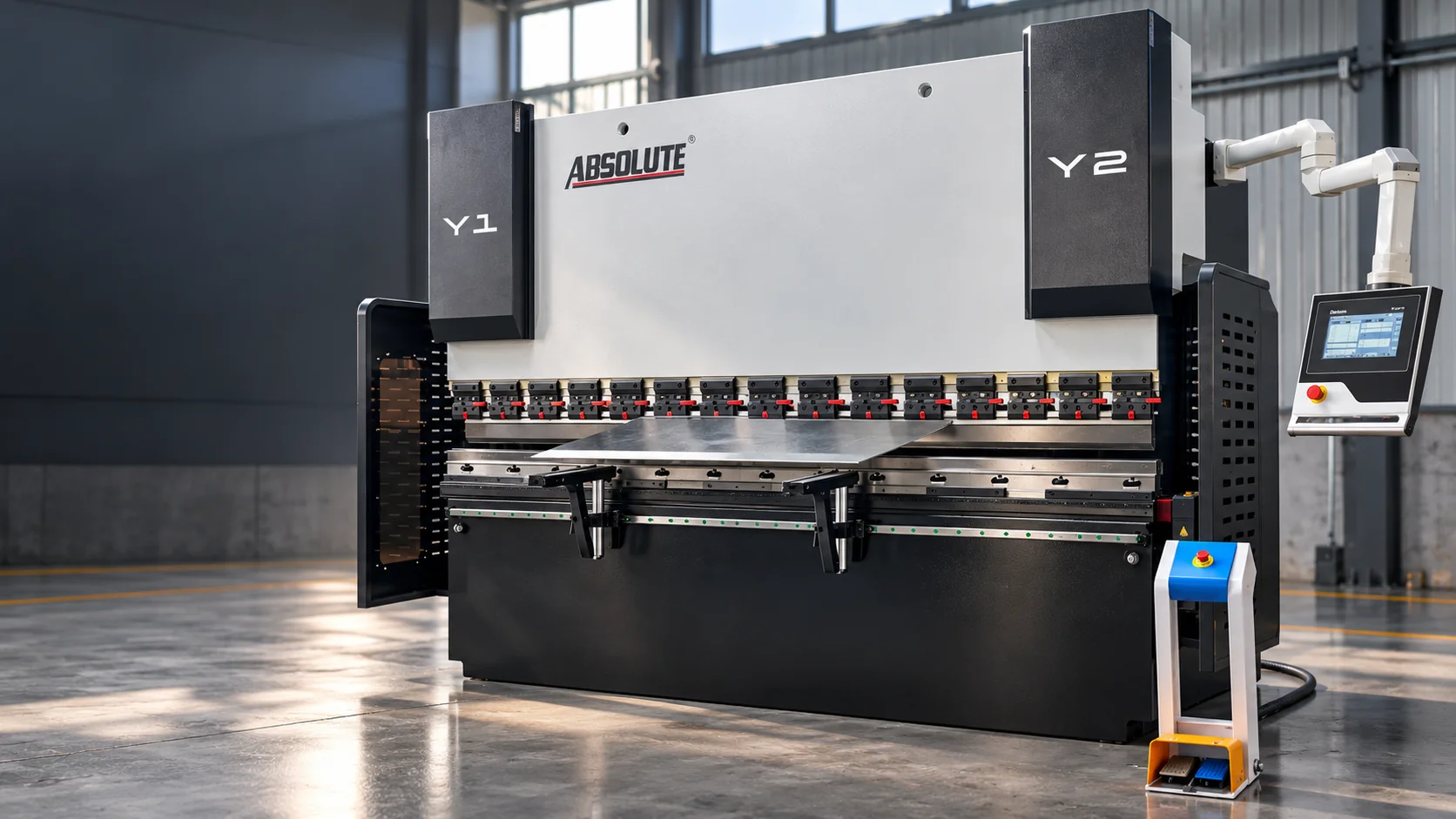
Industrial 3D visualization based on the supplied DA-53TX machine references. The final machine configuration should be checked against the actual quotation.
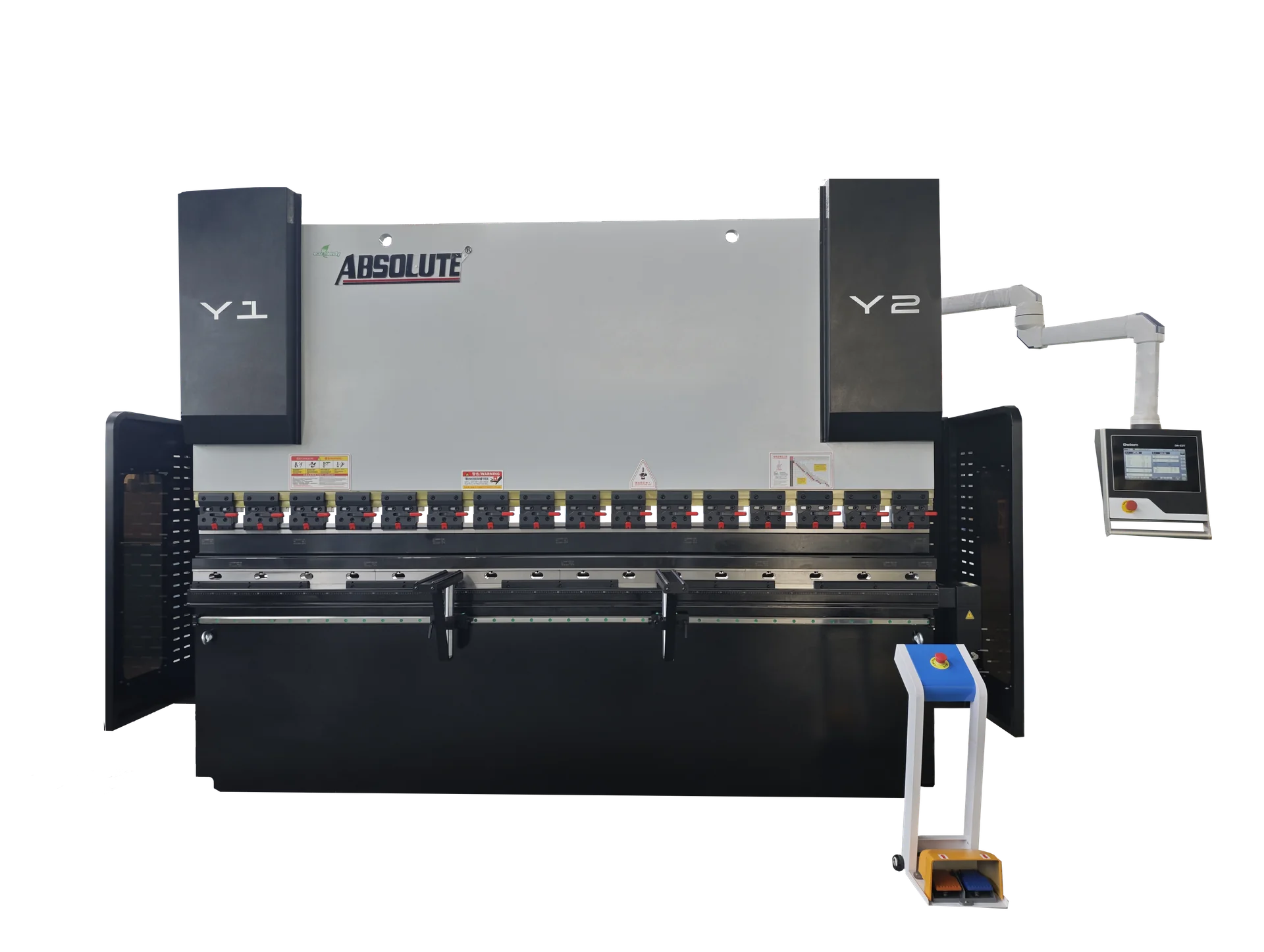
The DA-53TX is a CNC press-brake control configuration used to organize bending programs, angle values and backgauge positions from a single operator interface. In the supplied machine photographs, the controller is mounted on an articulated arm at the side of the press brake, while the working area includes a segmented upper tool, a lower V-die, front supports and a rear guide system.
That combination matters because a press brake is a complete forming system. The controller helps manage the job, but the result still depends on the material, bend angle, inside radius, die opening, tooling condition, machine capacity and how the part is supported. A clear selection review therefore starts with the part drawing and ends with a confirmed machine-and-tooling setup.
Front working area: the reference photos show a full-width bending beam, segmented upper tooling and a lower die mounted along the worktable.
Control interface: the photographed screen is marked Delem DA-53T and presents bending values and positioning information for setup review.
Positioning structure: the rear of the machine shows linear guides, drive components and backgauge fingers used to position the sheet before a bend.
Operator support: front support arms and a foot-control station are visible in the supplied machine references.
Machine identity: the white and dark graphite body, ABSOLUTE branding, Y1/Y2 side labels and warning labels are preserved in the supplied render and photographs.
Compare a DA-53TX CNC press brake by material, force, working length, tooling and backgauge. Learn what to confirm before ordering from Absolute CNC.
| Selection item | Supplied range or reference | What to confirm before ordering |
|---|---|---|
| Nominal force | Confirm for the selected machine | Material grade, thickness, bend length, die opening and required force for the actual part |
| Worktable length | Confirm for the selected machine | Longest bend, part overhang, support arrangement and loading method |
| Power in supplied table | Confirm for the selected machine | Exact motor, electrical standard, installation conditions and machine row |
| Control and positioning | Confirm for the selected machine | Configured axes, travel, software functions, finger layout and final controller scope |
Confirm for the selected machine.
Record the material grade, nominal and minimum thickness, bend angle, inside radius, shortest flange, longest bend and critical tolerances. Include holes, slots, return flanges and any surface-finish requirements near the bend. These details determine whether the proposed tooling can support the part without collisions or unwanted marks.
Do not choose a model only because its headline tonnage looks high. The required force changes with material, thickness, bend length, die opening and bending method. The worktable must also accommodate the longest bend and the way the sheet is loaded. Ask for the calculation basis and the exact model row used in the quotation.
The DA-53T control interface shown in the supplied photo keeps program, angle and positioning information in view during setup. The backgauge, however, is the physical system that brings the sheet to the programmed position. Check the configured axes, finger positions, travel, guide condition and the way the part will be supported at each bend. A controller name alone does not prove that every function is included on every machine.
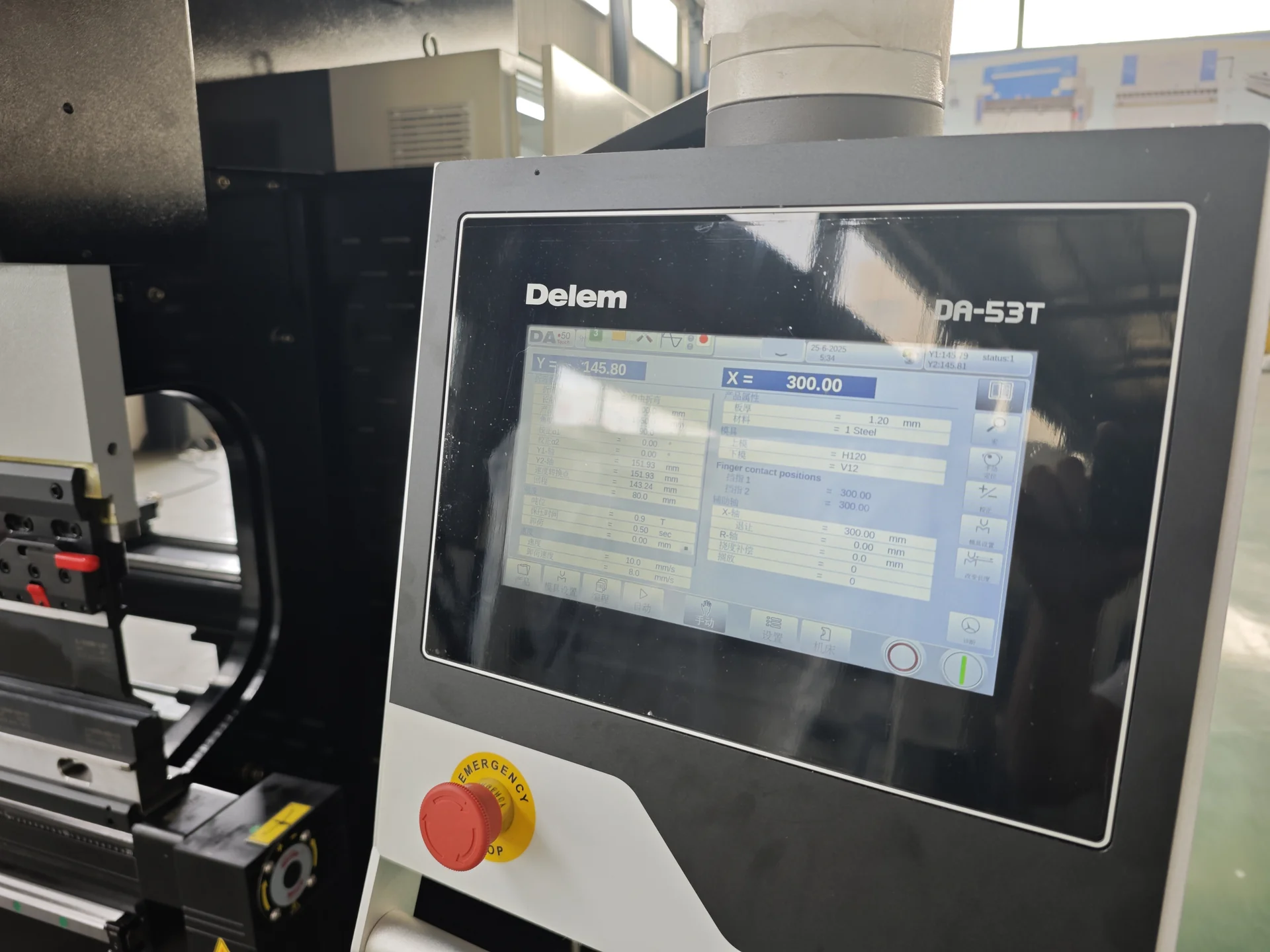 Earlier DA-53T controller: reference photo, not the newer DA-53TX controller.
Confirm the upper punch, lower V-die opening, shoulder radius, segmented lengths and clamping method. For mixed work, compare the tooling changeover process and the number of die openings required. The correct die is a part of the forming setup: it influences the inside radius, force, minimum flange and the clearance available around holes and returns.
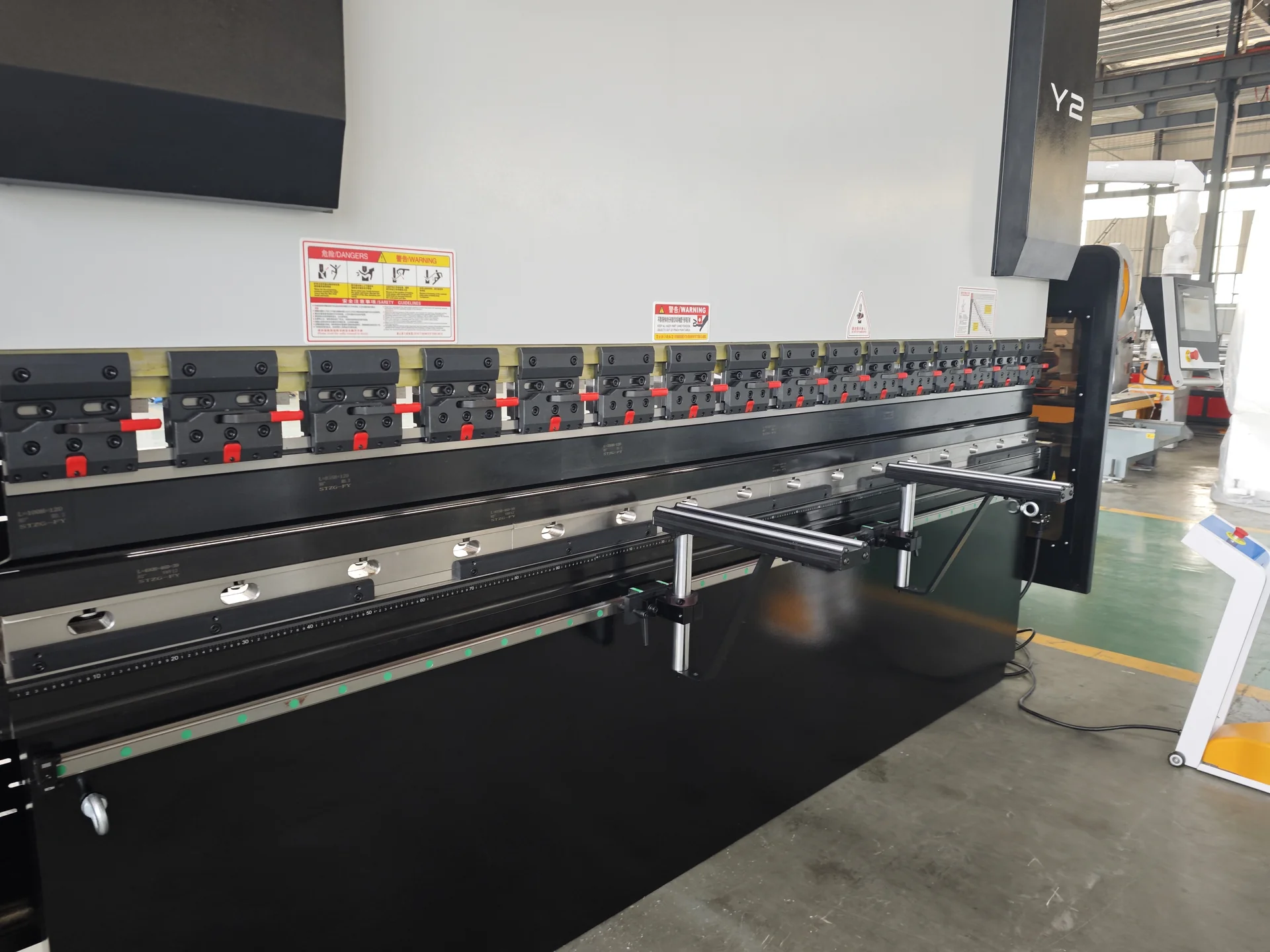
For repeat work, a good review includes the rear guide rails, drive screws, fingers and front support arms. Long parts may need more than a long table: the operator must be able to hold, align and turn the sheet without interfering with the tool or the programmed sequence.
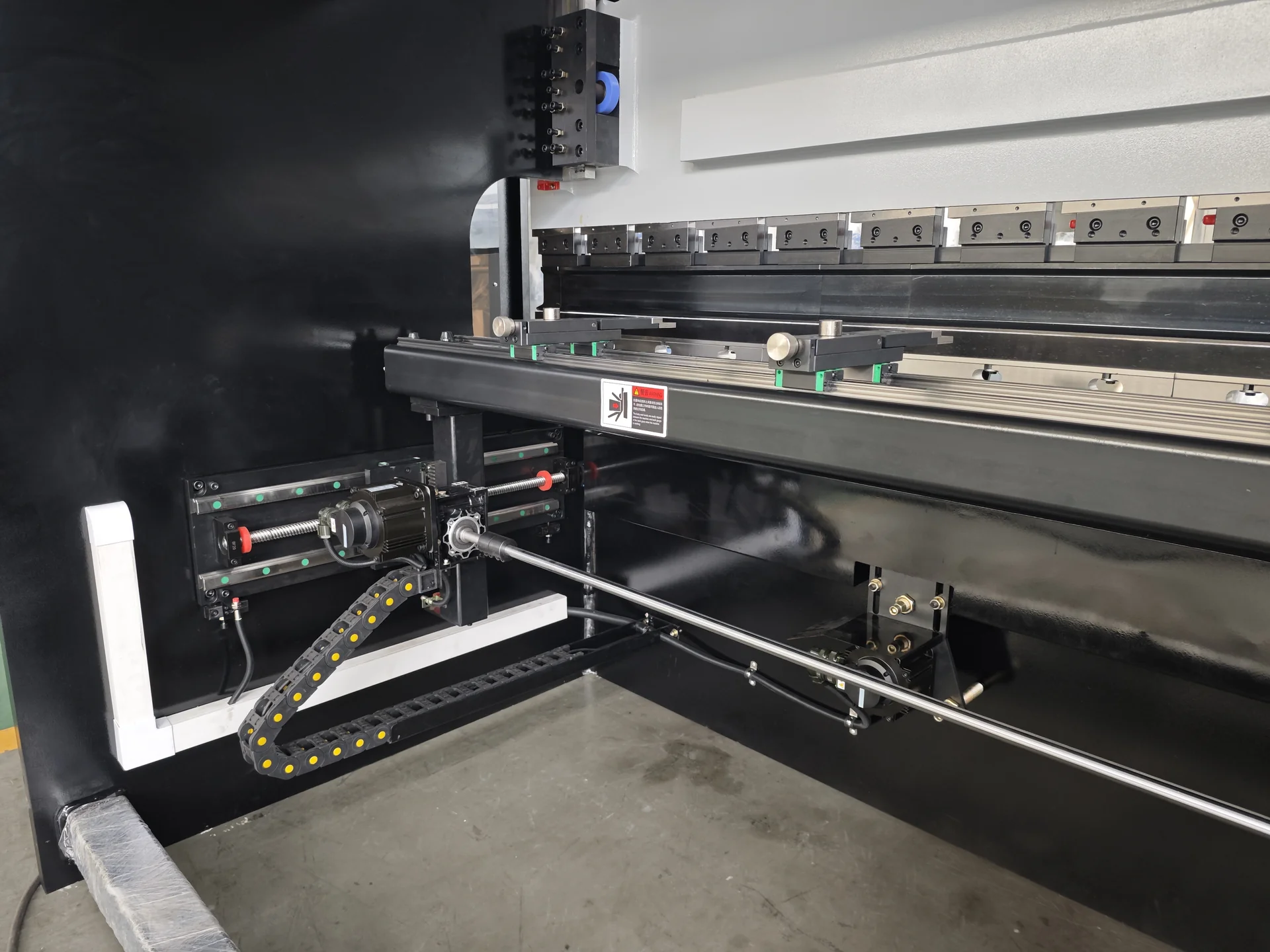
A DA-53TX press brake can be discussed for many sheet-metal jobs, including machine covers, electrical enclosures, cabinet panels, stainless-steel parts and general fabrication. The practical question is not whether the machine can bend “metal” in general; it is whether the selected row, tooling and support method fit your parts.
Mixed small batches: review program handling, setup visibility and tooling changeover.
Long panels: review worktable length, backgauge travel, front supports and safe loading.
Short flanges or close features: review die shoulder geometry, clearance and the bend sequence from the drawing.
Thicker material: review the required force, die opening, tooling rating and machine row together.
Choosing by tonnage alone. Force, length, tooling and material must be evaluated as one setup.
Assuming the controller defines the whole machine. Confirm the actual axes, travel, software functions and included hardware.
Ignoring the shortest flange. A wide opening may still fail when the flange or nearby feature needs more support.
Using a render as a technical drawing. The 3D image explains the machine concept; final dimensions and capabilities come from the machine file and contract.
Sending only a machine name for quotation. Include the drawing, material, thickness range, bend lengths, angles, tolerances and typical parts.
No. The supplied material shows a series with different force, worktable and power combinations. The exact model should be selected from the workpiece and confirmed in the quotation.
No. The control organizes the program and positioning information, while the result also depends on material variation, tooling, die opening, machine condition, setup and operator handling.
Send a dimensioned PDF drawing, material grade, thickness range, longest and shortest flange, bend angles, inside-radius requirements, critical tolerances, expected batch size and any surface-finish requirement. A CAD file and a photo of the typical part are helpful.
No. It is an industrial visualization based on the supplied machine references. Use the actual machine, tooling drawing, inspection information and signed specification when approving a production setup.
Send your drawing and material details to info@cnabsolute.com. We can review the machine direction, worktable length, force range, controller scope, backgauge arrangement, tooling and support requirements against your parts.
Related: ABSOLUTE CNC press brake range.
This guide covers the newer DA-53TX configuration. Machine photos show an earlier DA-53T installation for mechanical reference; the DA-53T controller photo is not a DA-53TX product photo. Confirm the current controller and complete machine configuration in the quotation.

Contact:Alice Li
Tel:+86 13115000086
E-mail:info@cnabsolute.com
Address:Mingjue Industry Zone,Lishui Town,Nanjing City,Jiangsu Province,CHINA.
Copyright © 1990-2026 Absolute Cnc Machine Co., Ltd. ABSOLUTE